
How Many Pieces in a Backgammon Set: Essential Guide
Backgammon is a game that has existed for a long time and is estimated to be around 5,000 years old. It's a game of two players, played on a board that consists of twenty-four narrow triangles called points.
The triangles alternate in colour and are grouped into four quadrants of six triangles each. These quadrants are recognized as the player's home board and out board, the same for the opponent's board too.
The home and outer boards are separated from each other, with a ridge down the center of the board; this is called a bar.
Now that you know what the game is, this guide will provide an essential insight into how many pieces are in a backgammon set, as well as some helpful strategies that will set you up for backgammon success.
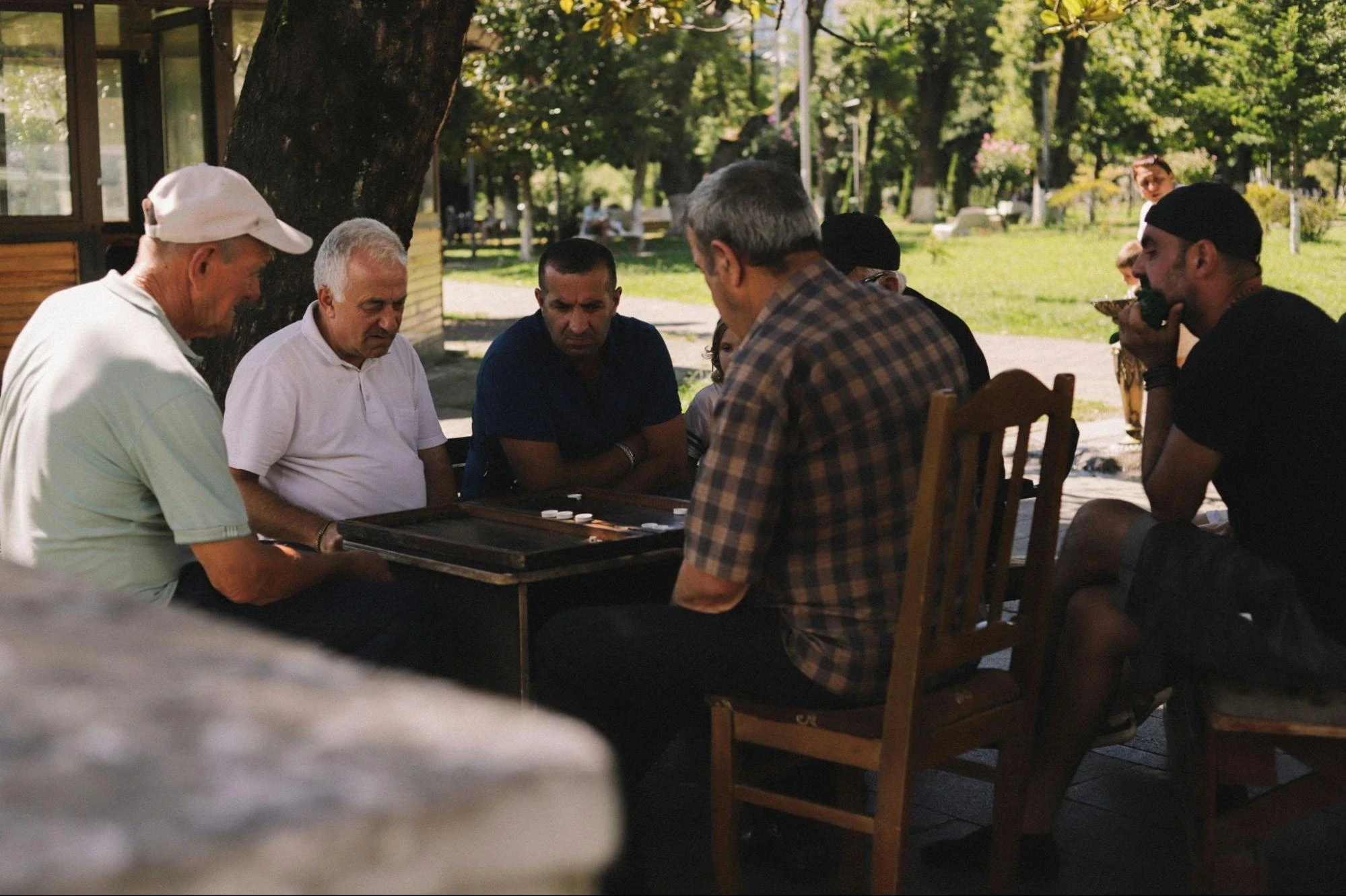
Backgammon Basics: Counting the Pieces
To become a better backgammon player, it's best to begin with the basics. This means counting the pieces or the pip count as it's known.
At the start of the game, both players will have a pip count of 167. This number will change as the players move through the game. In general, the pip count will fall, but it's possible if checkers are hit, for that number to rise above 167. The first player who gets to a pip count of zero will be the winner.
Being able to count the pip count is a useful skill in backgammon, and it's often the difference between a beginner and an intermediate player. Backgammon is a race between the two opponents to bear off all of their checkers. Knowing the pip count helps you to understand your position within the race. It allows you to apply the correct strategies and tactics required to make your moves the best they can be.
As a beginner, pip counts are intimidating because you're likely already overwhelmed by all of the new backgammon concepts that require understanding. However, counting pips is a skill that is important to acquire to give yourself the best advantage.
The pip count is a way of tracking the countdown as you bear off your checkers. At the start of the game, you'll have a total of fifteen checkers to move across the points on the backgammon board. When you tally up the number of points your checkers need to move from the starting positions to get them off the board, you should have a total of 167 pips - or points as it's often referred to.
As your checkers move forward, you subtract the number of pipes that have moved from the initial total. When a checker gets hit, it has to re-enter, and that gets added to the overall pips, which bumps your count higher. It's not uncommon to see a count higher than 167 in the middle of a game.
If you play the game online or electronically, then the pip count is calculated for you. However, for live games on a real backgammon board, you'll need to tally them yourself manually.
The pip count is a useful technique that you should try to understand as quickly as possible.
Essential Equipment for Backgammon
When you're playing Backgammon for the first time, it's good to know what essential equipment comes with the game itself. That way, you can get a clear understanding of every element that makes up the game itself.
You've got the board itself. The design of which can come in a variety of colours and features 24 triangular points arranged in two halves. This is called the playing field. Here's what else will come as part of the game:
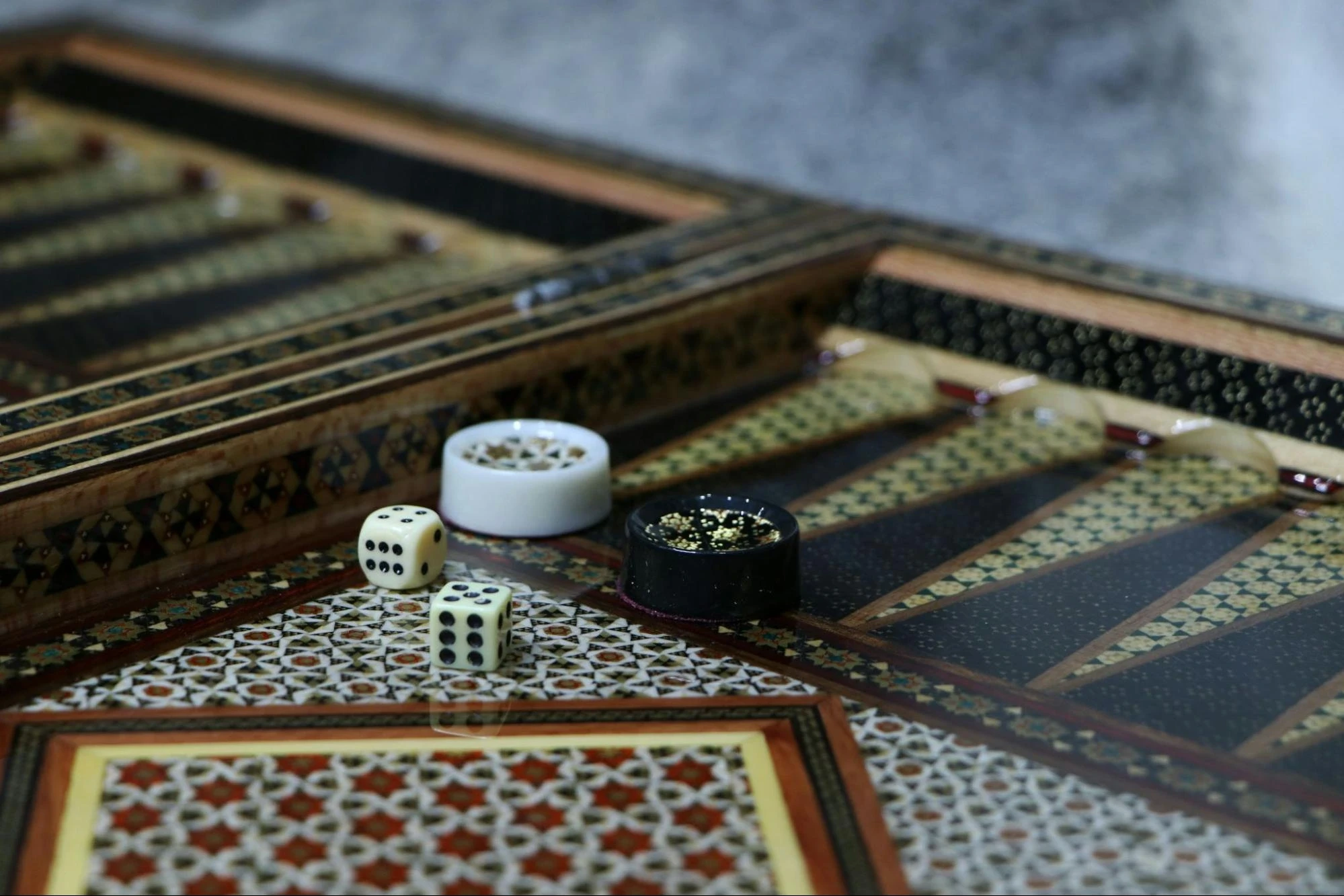
- 30 checkers, 15 in each of two colors
- Two pairs of dice
- A dice cup for each player
- A doubling cube
It's good to check that you've got all of this equipment before you start playing. The checkers will also be referred to often as the stones or pieces. The two pairs of dice are recommended for each person so that they can have their own. However, one pair can be shared between the two players if needed.
Dice cups are good to have individually so that they ensure fair rolling of the dice. A doubling cube with numbers on its faces is used to raise the stakes during gameplay.
Setup Strategies for Backgammon Success
Effective backgammon setup strategies will help ensure you give yourself the best chance of success when playing the game. With that being said, here are some helpful strategies worth knowing to help beat your opponent every time.
1. Split your back checkers
As part of your opening moves, it's beneficial to move your back checkers to different points. This can help to create flexibility and builders for future moves.
2. Secure key points
Focus on making your 5-point. This is also known as the 'golden point'. It's a strong base for a prime with your 6-point. For context, a five-point is the fight point in the player's home board, counting from the bar.
Strategically, it's very important because holding it provides a huge defensive and offensive advantage. It limits your opponent's movement and makes it easier to build a prime.
3. Split before your opponent closes points
Splitting your back checkers before your opponent has closed their home-board points is the best time to do it.
4. Avoid passive plays
Taking calculated risks will help increase your winning chances and will put pressure on your opponent as a result. Try to avoid passive plays that allow your opponent to escape.
5. Build primes
A prime is a wall of connected made points that essentially traps your opponent. A 'six-prime' will completely block your opponent's checkers from passing.
6. Hit and close
A hit and close, otherwise known as a blitz strategy, involves hitting the opponent's single checkers, also known as blots, and using the checkers in your home board to make the points. It essentially closes your opponent out so they cannot re-enter from the bar.
7. Create anchors
The anchor is a point in your opponent's home board that you've made. It provides a safe landing spot that can be used to hit your opponent's checkers later on.
8. Go for a race
If you're ahead in the race, break contact and try to get your checkers off the board as quickly as you can.
You should also avoid stacks. Having too many checkers on a single point can be inefficient. Try to avoid making stacks, as that often limits your options available.
The Role of Dice in Backgammon
The dice in backgammon will determine the moves and provide the game's element of luck, which you, as a player, will balance with the right strategies.
Players roll two dice to move their checkers around the board. The numbers on the dice will indicate how many points can be moved, and therefore, a player must use both dice rolls if possible, or larger if only one is playable.
The numbers on the two dice can be used to move two different checkers if required, or a single checker can be moved twice.
The legal moves available to make are the following during backgammon:
- A checker can be moved to an open point that has no checkers currently in place
- A checker can move to a point with one or more of the player's own checkers
- A checker can move to a point with a single opponent checker.
By landing on a point with a single opponent checker, 'hits' the opponent's checker, sending it to the bar.
If a player has a checker on the bar, they then must use their dice to roll to re-enter it into the opponent's home board. If the player rolls a double, they play the number twice, for a total of four moves.
Once all of the players' checkers are in their home board, they can begin to bear them off the board. Checkers can be removed from the board by rolling the corresponding number on the die. A die roll can also be used to move a checker within the home board to a closer point.
Finally, let's talk about the doubling cube. The doubling cube is a separate, larger die with numbers 2,4,8,16,32, and 64 on the faces. This is a dice that can be used to increase the stakes of the game.
A play can offer a double once per turn before they roll the dice. The opponent then chooses whether to accept the double and therefore become the new owner of the doubling cube or refuse it. This means they concede the game and lose the current stake.
A good understanding of the backgammon pieces is important, as well as making sure all of the equipment is ready and available to begin the game. As well as that, the strategies you start to implement within your gameplay will ultimately help you gain better success when going up against your opponents.
The more you can strategize and improve your gameplay, the more chances you're likely to have of winning. Adopt these tips to your own gameplay of Backgammon next time you play.
Seasonal Backgammon Games


More Games




Backgammon News
Disclaimer
DISCLAIMER: The games on this website are using PLAY (fake) money. No payouts will be awarded, there are no "winnings", as all games represented by 247 Games LLC are free to play. Play strictly for fun.